Help us save 100 extra tonnes of much-needed cupboard essentials
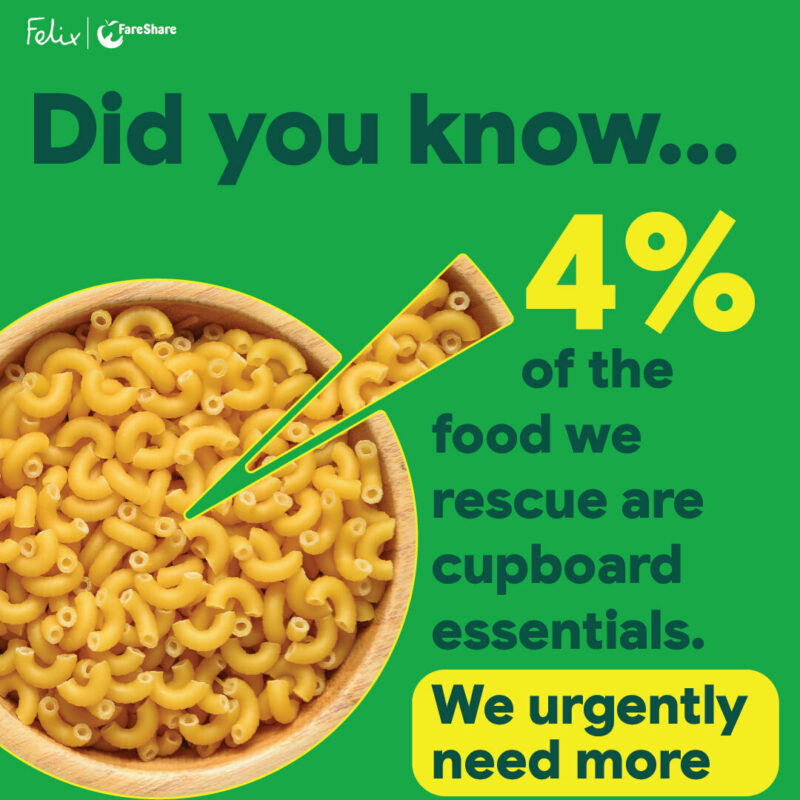
Did you know, only 4% of the food we redistribute are the everyday items we’d find in our cupboards? Basics like rice, pasta, tinned tomatoes, and cooking oil, essentials for creating nutritious and substantial meals.
We know families across the UK are struggling to cover the costs of buying these staples. In our 2025 survey, cupboard staples was the number one item in demand by their service users.
We want to address this. This spring, help us restock essential cupboard items so we can continue supporting 1.5 million people across the UK.
Organise a warehouse walk - what’s maybe been forgotten?
We can take many ambient products past their BBE date – for more info, check out the WRAP Guidelines
If you haven’t much spare at the moment, is there someone you know you could introduce us to? Or could you give this campaign a shout out on your socials?
This spring, help us save 100 extra tonnes (240,000 meals) of much-needed cupboard essentials by 30th June.
Please note, due to the way we log food, the “cupboard essentials” that made up the 4% we received in 2025 includes: Long-life juice and UHT milk; peanut butter, preserves and condiments; snacks e.g. dried fruit, nuts and biscuits; sponge and rice puddings. However, the food listed above are what we believe have the most impact on healthy, nutritious meals.
“
Those cupboard basics are a ‘must have’ in our household; they always have been. Even since I was a kid, our cupboards have always been full of long-life food such as pasta sauces, pasta, tinned beans, tea and biscuits. It makes you feel like you’ve always got something to hand to feed the family.
”
Rea, L6 Community Centre parent
“
For the kids, we kind of try anything. We get a lot of vegan produce; vegan chicken nuggets and mince to make bolognese. Pasta goes down well. Cottage pie, pie and mash and beans on toast seems to be a firm favourite with the kids. If we have spare, we always offer it to the parents; then the occasion turns into a family meal. It's important, as some families don't even have a dining table.
”
Sam, ECO Edlington Manager
“
We depend on that FareShare food, especially the store cupboard essentials during the holidays. It's part of a staple diet, that’ll fill you up for longer. As the kids aren’t getting their free school meals, there’s more financial pressure on parents. People can't afford to purchase what they like anymore. It's affecting everybody at the moment; everybody's got to count the pennies.
”
Shirley, CEO of Liverpool 6 community Association
“
The work at Newbigin is meaningful, as you meet a lot of people. They like to share their stories. It makes them happy to come here and feel heard. On occasion, we’ll make up a small food bag, if the person is in a bad situation. The bags includes coffee, sugar, rice, oil and pasta that we receive from FareShare. This food could tie them over until they start work or their money comes through.
”
Muskan, Newbigin Community Trust café employee
We need you
This Spring, help us save 100 tonnes of much-needed cupboard staples
If you have food like to donate, please fill in the form below. If you’d like to chat to us about how donating to Felix works or your eligibility as a food partner get in touch
.
Good Food for Good Causes
The Felix Project and FareShare have joined forces to become the UK’s leading food redistribution charity.
The charity rescues good-to-eat surplus food, that cannot be sold and would otherwise go to waste, from across the food industry. That food is repurposed and shared to support more than 8,000 community organisations across the UK. The charity manages seven depots and works with 16 network partners to operate a total of 35 depots across the UK. In 2025 we collectively redistributed 148 million meals to those in need.