DECEMBER 2025
- 23% of UK working parents have had to turn to a food support service in the last year.
- 10% are first time users and13% have been using services for over a year
- 1 in 4 are using food services every one or two weeks.
- 10% of parents have had to send their children to bed hungry at least once a week.
- 9% of parents have had to send their children to school at least once a week knowing they are hungry.
- 67% of parents who use food support worry their children are aware of the family’s financial issues.
Almost a quarter of working parents across the UK have had to turn to a food support service in the last year to help them feed their children.
Food redistribution charity The Felix Project surveyed 4,000 working parents with at least one child at home aged 16 and under. They found 23% have used a food bank, that could equate to 1,725,000 parents across the UK. Of those, 1 in 4 are using food services every one or two weeks to make sure they have enough food to feed their families.
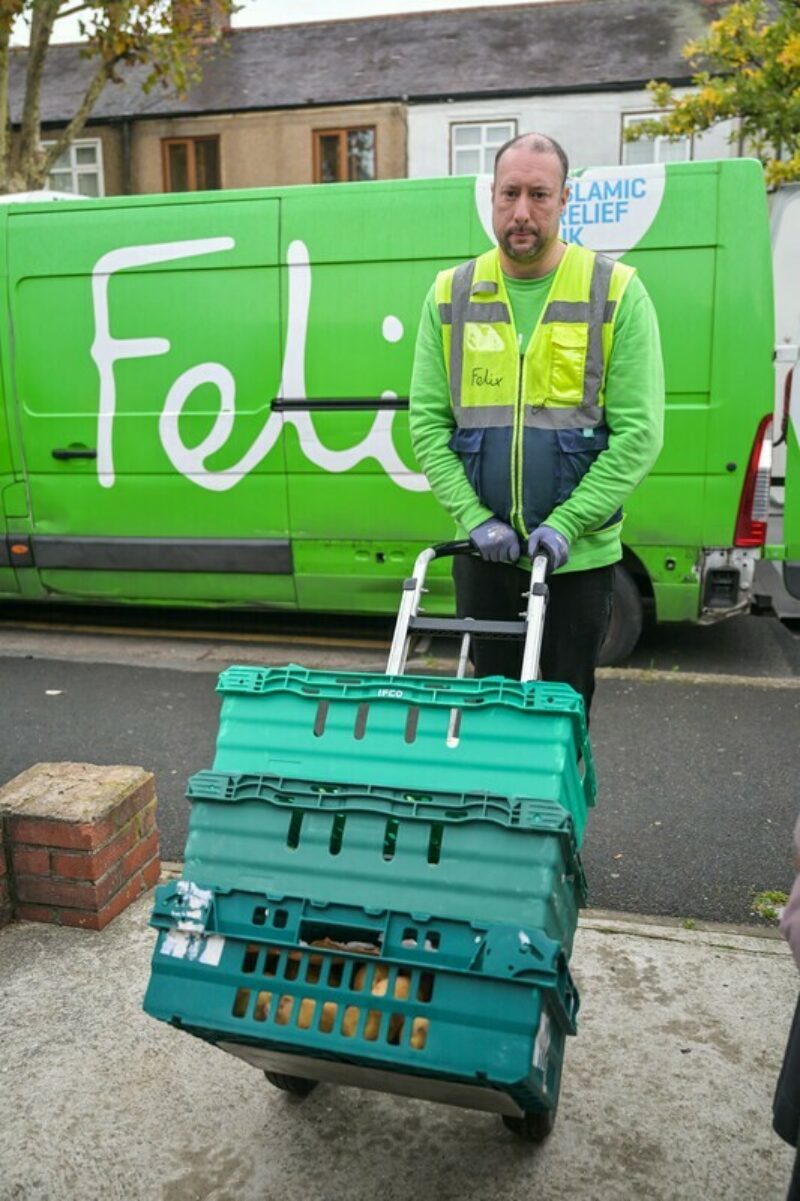
The Felix Project rescues good food, that would otherwise have gone to waste, and gets it to around 1,200 organisations across London, such as food banks, homeless shelters, community centres and primary schools. These incredible places feed people who are experiencing hunger and cannot afford to regularly buy the food they need.
With the ongoing cost of living crisis and the increased financial pressures people face during winter and at Christmas, food banks say they have been seeing more and more working parents turning to them for support. The survey revealed of the 23% of parents who are using foodbanks, 10% are first time users and 13% have been using services for over a year.
The survey also revealed that 1 in 10 parents have had to send their children to bed hungry at least once a week, because they cannot afford to buy enough healthy food, that equates to almost 722,000 parents. Similarly, 9% of parents say they have had to send their children to school at least once a week knowing they are hungry.
Rachel Ledwith, Head of Community at The Felix Project said: “This is a stark picture; to have the proof that children are going to bed hungry on a weekly basis is heart-breaking and to know that without foodbanks so many working people would go hungry demonstrates the need we are facing across every part of society. The Felix Project is doing everything it can to help, but as we move deeper into winter and with Christmas round the corner, we know the demand will grow even more
Earlier this year we announced The Felix Project and FareShare will merge to form a stronger, unified charity. We want to make sure that by bringing together our food partners, volunteers, resources and expertise, we will be able to reach more people with more food and try to do our part to ensure food, that would otherwise have gone to waste, will help feed people at risk of hunger.”
Through its 17 independent regional partners, including The Felix Project in London, FareShare gets food to over 8,000 charities nationwide. In 2024/25, it helped provide the equivalent of 148m meals.
One of those organisations is Angels Breakfast and After School Club, they provide food to over 150 families and individuals every week, including many working parents.
One example is Edith from South London, she lives with her 16-year-old son and works in a school five days a week, but says life is a struggle: “With the rent, paying the bills and all that, by the end of the month, I'm left with basically nothing. I try to live within my salary but it's very stressful, and sometimes it just doesn't stretch to end of the month.”
She uses the foodbank every Wednesday and says it’s a godsend: “I am not skipping meals but as a parent, I do buy less for myself, go without things because of the children. Honestly, the service, it's really helping me get by – I don’t know what I would do without it.”
She adds this time of year is much worse and there is only one solution: “I'm not doing any Christmas shopping. I'm not buying presents, because I don't want to be in debt. So, my children, they know mummy’s not going to buy them anything tangible. We do celebrate Christmas, but they don't expect any presents because there's no money to buy it.”
One of the things Edith is most concerned about is the impact this is having on her child: “He knows that we are struggling, because sometimes he asks for stuff. I will tell him there's no money now and he says mummy, why are we poor? Mummy? Why is there no money? It’s upsetting, I feel I cannot provide for my family, despite the fact I’m working, you just work to pay the bills, and nothing is left at the end of the month”
Edith is not alone, the survey also found of those parents who have had to or are close to using a food service, 67% worry their children are aware of the family’s money struggles.
Nike who runs the food bank, says for so many children food banks are becoming the norm.
“We still see lots of people on benefits and pensioners, but more working people are coming to us. They are doing all they can, but wages and bills are not in sync and they have no choice if they don’t want their children going to bed hungry – which sadly they are. I am not surprised to see these numbers and would expect many food banks across the country are in the same position.”
Crest Cooperative, a charity in North Wales that gets food from FareShare, have also seen more working parents. Rod Williams is the Managing Director and said: “There have been so many we have had to start doing an evening service so we can help those that are working during the day. We see teachers, nurses, so many who cannot make ends meet. One recent example is a young woman, who works part time, she came into our Food Bank the other day with 3 children, and she broke down in the shop. She was finding it hard to cope with the pressures of Christmas and the holidays coming up and was having to make the decision between food and heating. We subsequently donated loads of toys for her kids and provided her with food parcels, which we delivered to her home from the Food Bank. We also set her up with a fridge-freezer and a washing machine. The help is not just on a whim; you just know from experience it's the right support to give at that time.”
- The research was conducted by Censuswide, among a sample of 4000 Working Parents in the UK who have at least one child under 16.
- The data was collected between 19/09/25 – 29/09/25. Censuswide abides by and employs members of the Market Research Society and follows the MRS code of conduct and ESOMAR principles. Censuswide is also a member of the British Polling Council.
Extrapolations based on ONS family and working rate figures https://www.ons.gov.uk/peoplepopulationandcommunity/birthsdeathsandmarriages/familiesandhouseholds/2024, https://www.ons.gov.uk/employmentandlabourmarket/peopleinwork/employmentandemployeetypes/articles/familiesandthelabourmarketuk/2021 estimating 7.5 million working families in the UK.